
Wine Harvest Season in Dordogne : A Local’s Guide to the Vendanges
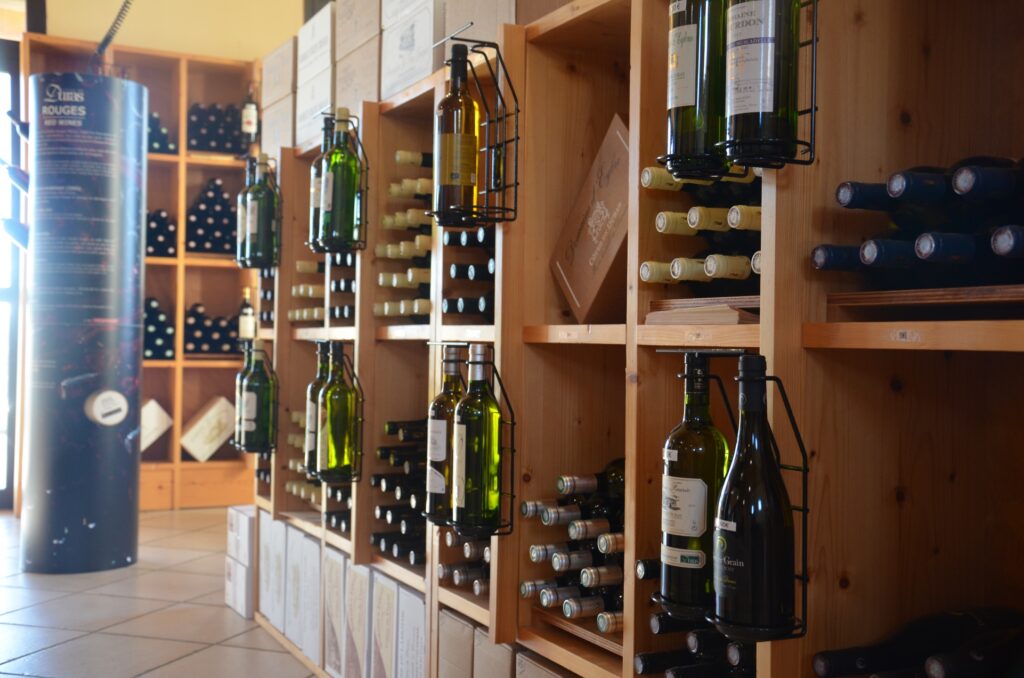
Photo: pays-bergerac tourisme
There’s a version of Dordogne that only shows up for about six weeks a year — after the festival crowds have thinned, when the vines start turning gold and the region’s winemakers open their gates for the harvest. No stages, no ticketed evenings, just a walk through the rows with the person who actually grows the grapes.
If you’ve stayed with us before, this is the trip worth coming back for. September and October in Bergerac-Duras are unhurried in a way August rarely is — smaller crowds, cooler mornings, and appointments with vignerons who have the time to actually talk. This guide covers the appellations worth the drive, when to go, and how to book a visit properly.
What’s in this Guide
Stop 01 · Orientation & Tasting
Before the Harvest — The Maison des Vins
Cloître des Récollets, Bergerac · roughly 1h10 from Domme
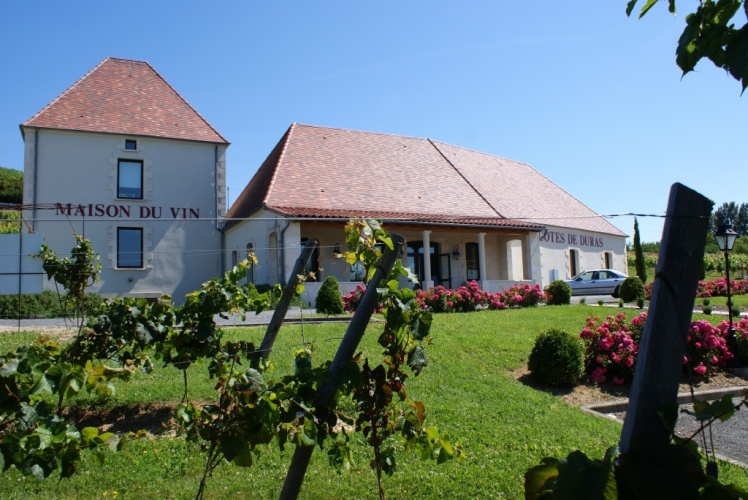
Photo: pays-bergerac tourisme
Housed in a 12th-century cloister on the banks of the Dordogne, this is the starting point of the Route des Vins — a permanent exhibition on the vineyard’s history, a tasting room covering all seven Bergerac-Duras appellations, and staff who can point you toward whichever domaines suit your afternoon. Fifteen minutes here will save you from arriving at the wrong estate for the wine you actually want to taste.
→ Ask them which domaines are picking that particular week — harvest moves through the appellations at different times, and they track it in real time.
September
Northeast of Bergerac, Pécharmant’s gravel-and-clay slopes produce the region’s most structured reds — and its harvest has a different rhythm entirely: one pass, gathered fast, usually finished by late September.
Stop 01 · Structured Reds
Domaine du Haut Pécharmant
Typically picked 5–20 September* · Pécharmant appellation, north of Bergerac · roughly 1h10 from Domme
One of the appellation’s established estates, on south-facing slopes that have produced Pécharmant’s denser, more tannic reds for generations. Visits typically cover the vineyard, the chai, and a tasting — during harvest, expect the yard itself to be busy with the picking crew and the crush, which is really the point of timing a visit for September.
→ Pécharmant reds are built to age if you’re tempted to buy a case, ask the domaine which vintage is actually ready to drink now versus one worth cellaring.
Stop 02 · Family Estate
Château Le Payral
Typically picked 10–25 September* · Bergerac-Duras vineyard, 30 hectares · roughly 1h15 from Domme, visits by appointment
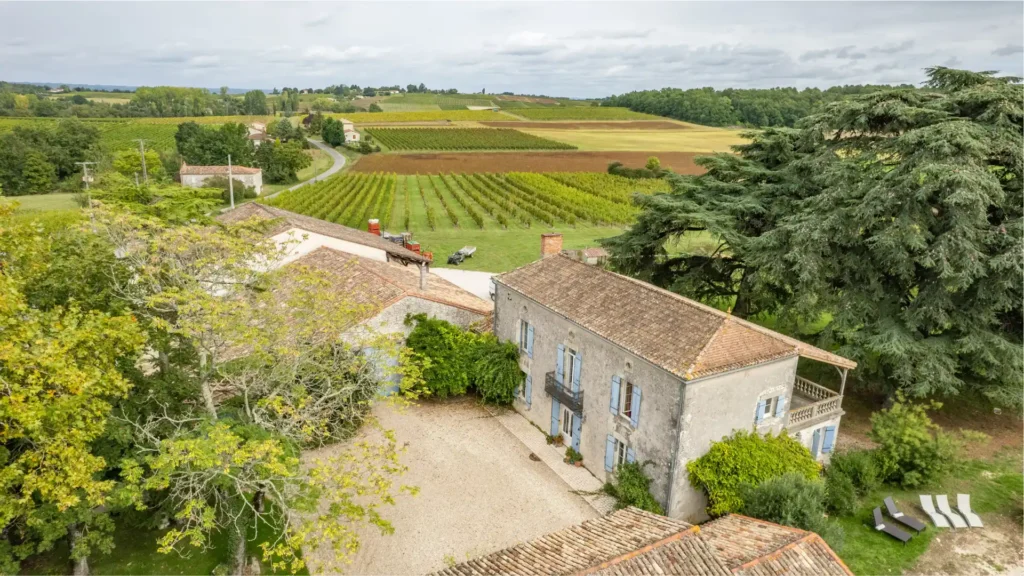
Photo: Château Le Payral
A family-run property spread across the Bergerac-Duras vineyard, open for visits by appointment rather than a fixed schedule — which during harvest usually means a more personal welcome than the estates built for coach tours. Good option if you’d rather meet the people making the wine than tick off an appellation.
→ Appointment-only during September and October means the family is genuinely available to talk — book a few days ahead rather than the morning of.
October
Monbazillac and Saussignac are where the harvest looks most dramatic — pickers moving through the rows several times over as the noble rot concentrates the grapes, sometimes as late as November.
Stop 01 · Noble Rot Country
Monbazillac
Tries pass through 15 Sept – 10 Nov* · South of Bergerac · roughly 1h15 from Domme
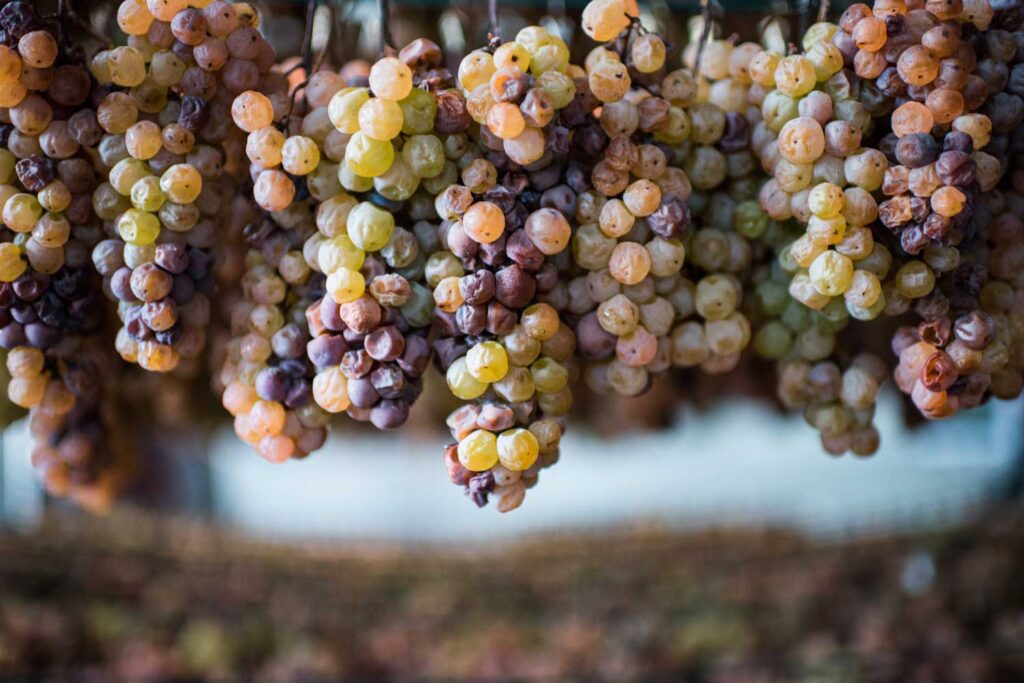
Photo: the winenerd
Legend has it the appellation’s sweet wine was born from a monastic mistake —grapes left too long on the vine, ambushed by the morning mist off the Dordogne and the afternoon heat that follows. That same fog-then-sun rhythm still drives botrytis cinerea, the “noble rot” that concentrates the fruit. Pickers pass through the same rows several times across the season, taking only the berries ready that week, which is why Monbazillac’s harvest can run well past everyone else’s.
→ Time a visit for mid-morning, once the fog off the river has burned away but before the heat sets in — it’s when the hillside views over the vines are at their best.
Stop 02 · The Quieter Cousin
Saussignac
Tries pass through late Sept – late Oct* · Just west of Monbazillac · roughly 1h20 from Domme
A small appellation that rarely makes the tourist maps, which is exactly its appeal. Saussignac produces sweet wines in the same style as Monbazillac but at a fraction of the visitor numbers — smaller family domaines, unhurried tastings, and vignerons who are glad of the company. Worth a stop if the idea of Monbazillac appeals but the idea of company doesn’t.
→ Call ahead rather than dropping in. These are small, working properties during harvest, and a scheduled visit gets you a much better conversation than an unannounced one.
Going Further
Duras itself sits further out — worth knowing before you plan the day.
Full Day Option
Duras
Lot-et-Garonne · roughly 1h45–2h from Domme
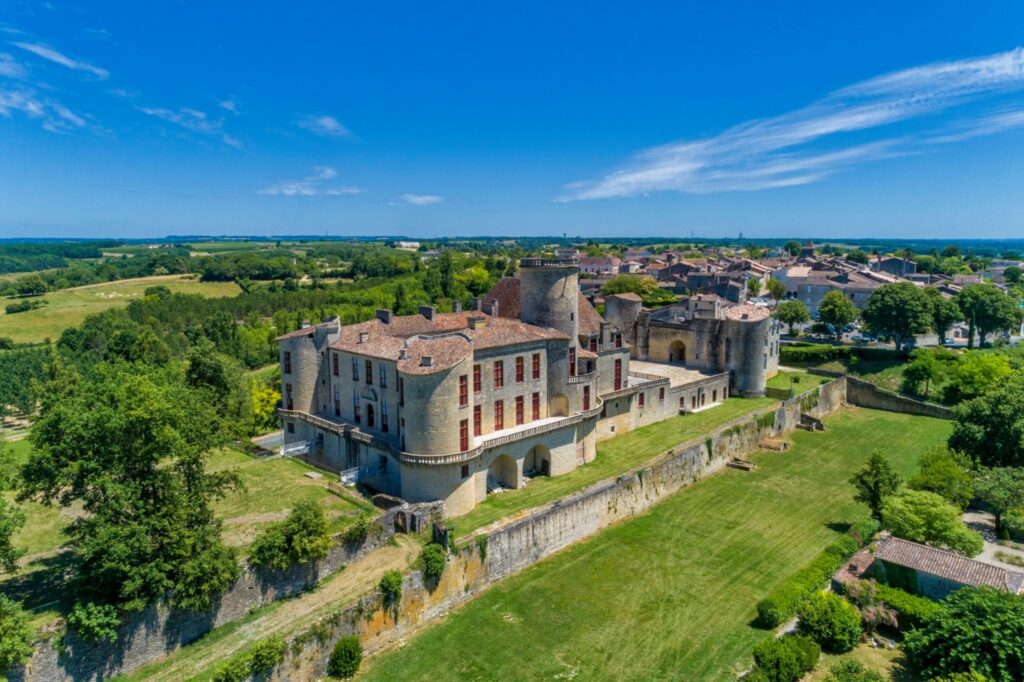
Photo: pays-bergerac tourisme
Duras shares the same wine route and appellation family as Bergerac but sits far enough west that it’s a full day rather than an afternoon detour — closer to two hours each way with the return drive. Its 14th-century château and small-town pace make it a worthwhile trip in its own right, just not one to bolt onto a Monbazillac or Pécharmant visit. Best treated as its own outing if your stay is long enough to spare a full day.
→ If a full day to Duras doesn’t fit this stay, the Bergerac-side appellations above cover the same wine route in a fraction of the driving.
When to Go
Harvest timing varies by up to ten days each year, depending on the vintage and the grape.
As a general pattern for Bergerac-Duras: Pécharmant and the dry whites are usually picked first, through September; Monbazillac and Saussignac’s sweet wines are harvested in several passes and can run into October or, in some years, November. Broadly, September and October are the safest window to see harvest activity across most appellations — for a specific domaine, it’s worth calling ahead or checking with the Maison des Vins the week of your stay, since the exact start is set closer to the date by each estate.
Stay at La Perle de Domme for Harvest Season
Harvest season brings the same valley view, minus the summer crowds — cooler evenings on the terrace, a quieter breakfast overlooking the Dordogne, and rooms designed for slowing down after a day among the vines.
Domme sits roughly 1h10 to 1h20 from every appellation in this guide, close enough for an easy half-day out and back without losing the afternoon to driving, and near enough to Bergerac and Sarlat alike to make it a natural base for the whole vendanges.
Come back to the terrace, glass in hand, valley below — a fitting way to return to a place you already know.
Book now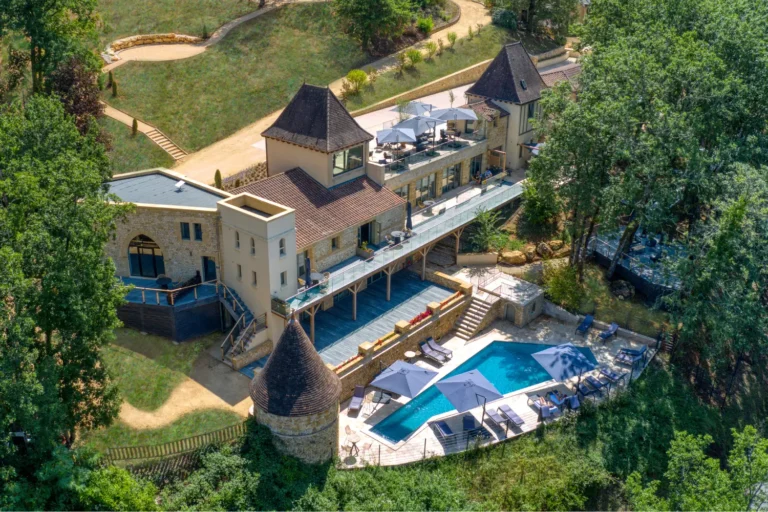
Stay in Style at La Perle de Domme.
Escape to the Dordogne and stay at our holiday apartments in Domme.
Frequently Asked Questions
Yes, especially during harvest. Most Bergerac-Duras domaines are small, working properties — during the vendanges the team is often out in the vines, so an unannounced visit may mean no one is free to show you around. A call or email a few days ahead is the norm, and gets you a far better welcome.
All of the Bergerac-area appellations — Monbazillac, Saussignac, and Pécharmant — sit roughly 1h10 to 1h20 from Domme. Duras is significantly further, at around 1h45 to 2 hours each way, so it’s better suited to a full day than a half-day detour.
Both, depending on timing. If your stay lines up with a domaine’s picking days, most are happy to have visitors walk the rows and see the crush, alongside the usual cellar tour and tasting. Ask when you book — some estates plan around visitor schedules, others don’t.
For the vineyards specifically, yes — it’s the one time of year the region is actually working rather than simply open for visitors. Crowds are lighter than August across the Dordogne generally, and the harvest gives a reason to visit beyond the usual château-and-market circuit.